Dupuytren’s
contracture
Learn some
useful tips
Welcome to our Dupuytren’s contracture minisite
If you’re in pain and trying to find out why your hands hurt, this informative site has the answers you’re looking for.
Educational,
easy-to-understand videos
Dr. Brutus has made a variety of resources available to his patients, including reliable and credible medical information in audio and visual formats. These resources are presented clearly and simply in layman’s terms and are available for free to help those suffering from hand pain on their road to recovery.
Dr. Brutus is a passionate expert who has specialized in minimally invasive surgical techniques for more than 20 years. He has been quoted numerous times in the media and invited to speak by multiple associations thanks to his recognized expertise.
Risk factors and symptoms
Diagnosis and surgery
Treatment options
Practical and comprehensive
medical guide
Everything you need to know to identify and treat Dupuytren’s contracture. Written in clear and simple language by hand surgeon Dr. Jean-Paul Brutus, this e-guide identifies the causes, symptoms, and different ways to treat Dupuytren’s contracture and offers recommendations on how to ease your symptoms at home.
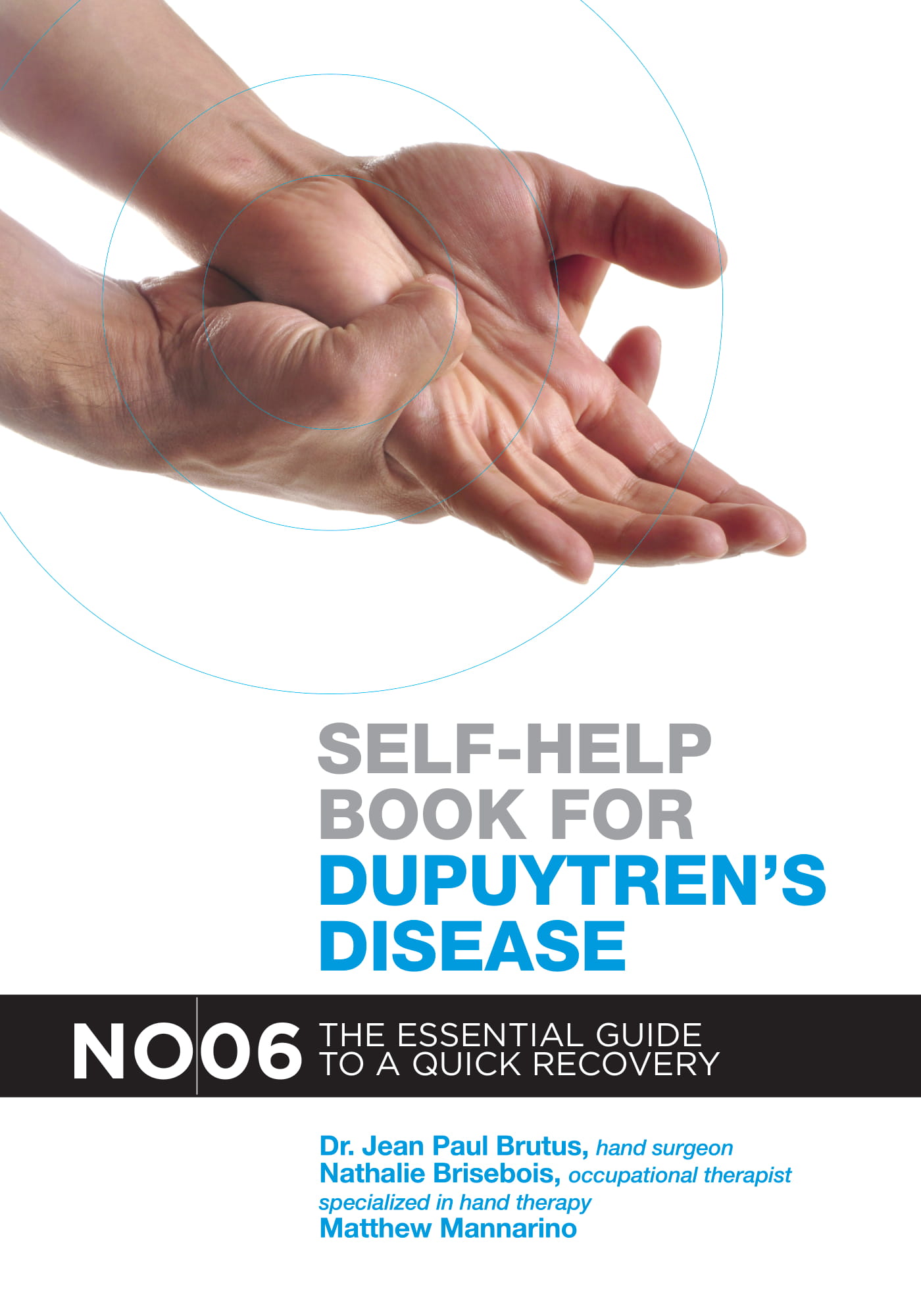
Self Help Book for Dupuytren’s Contracture
What are the signs of Dupuytren’s contracture?
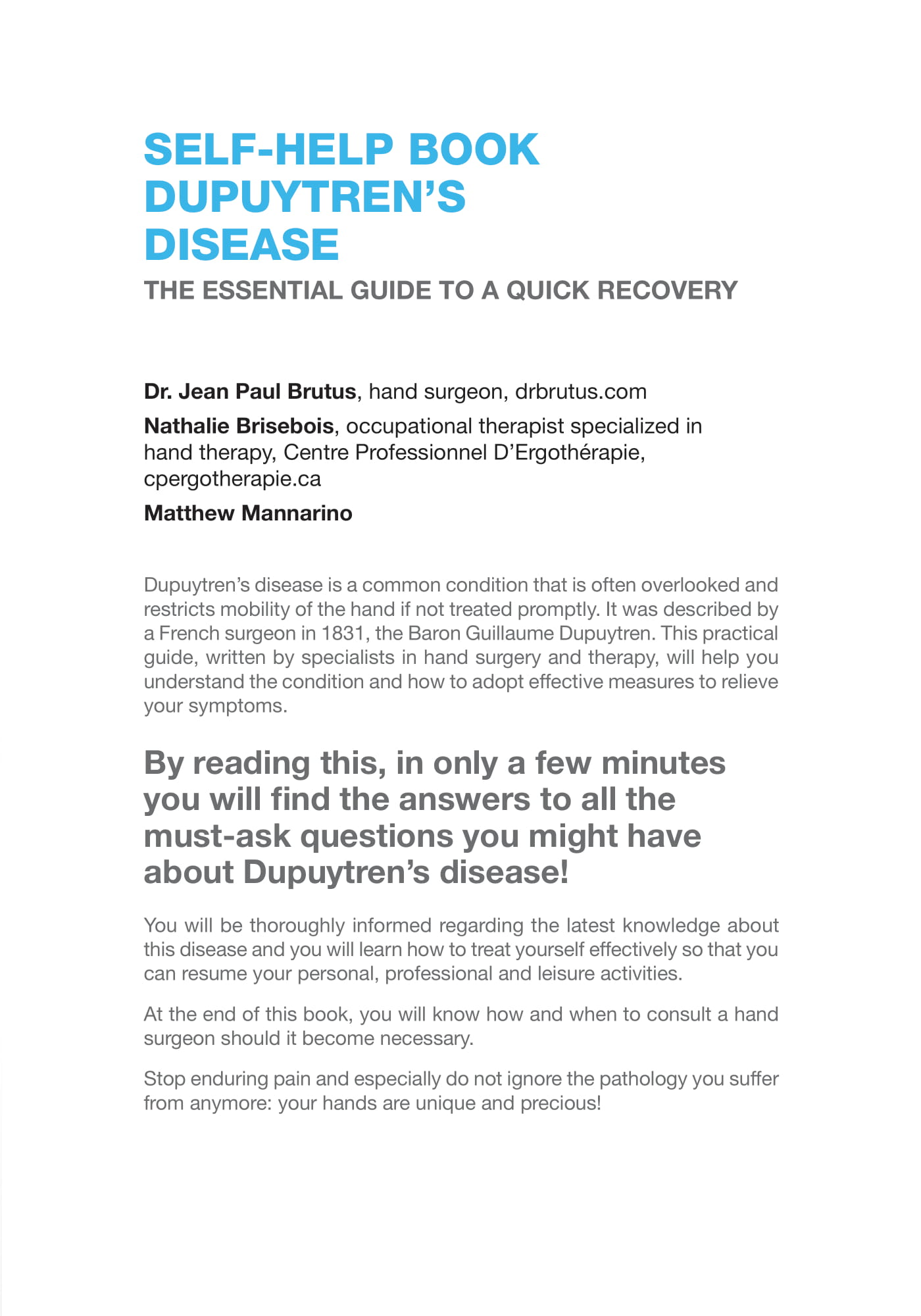
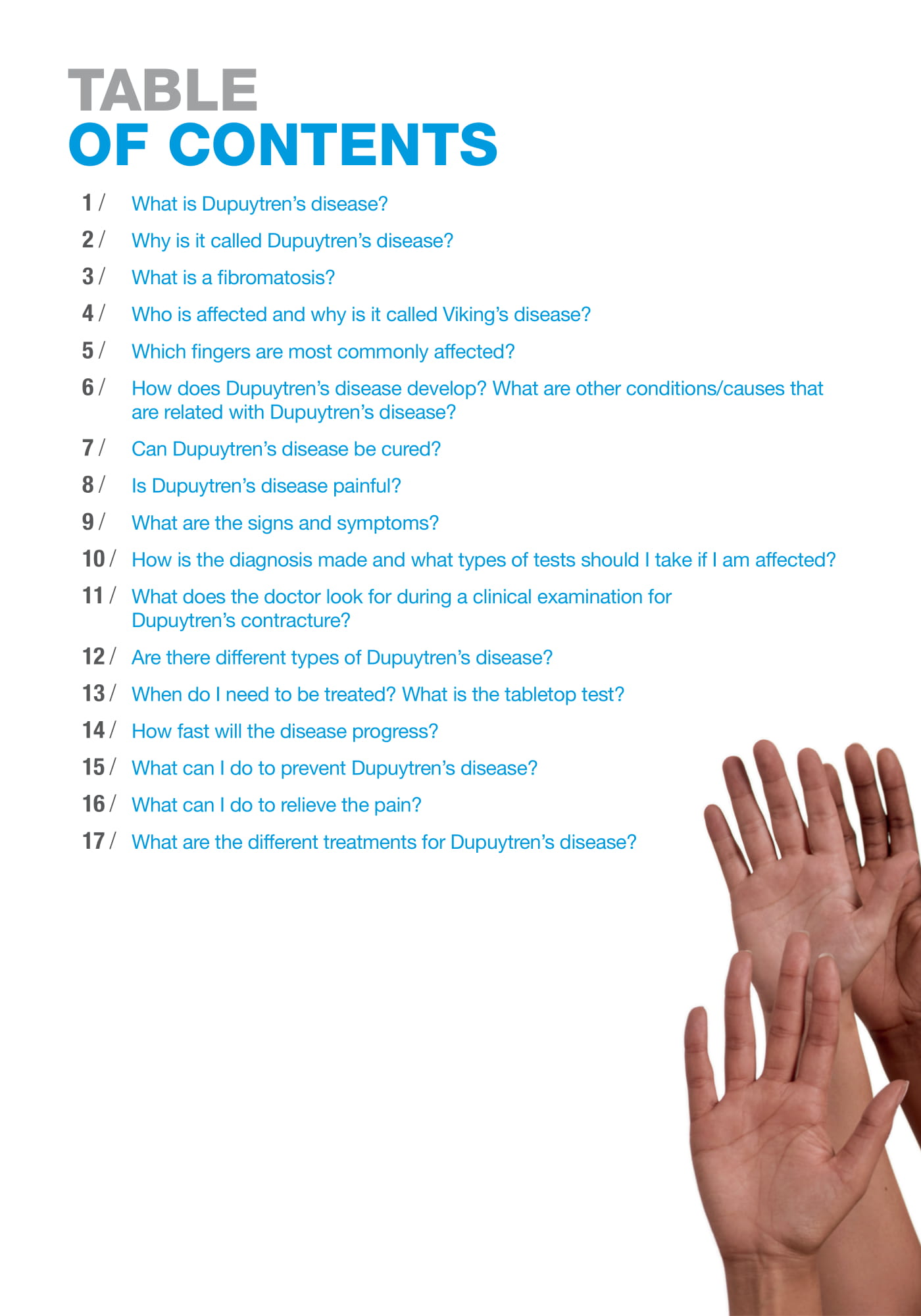
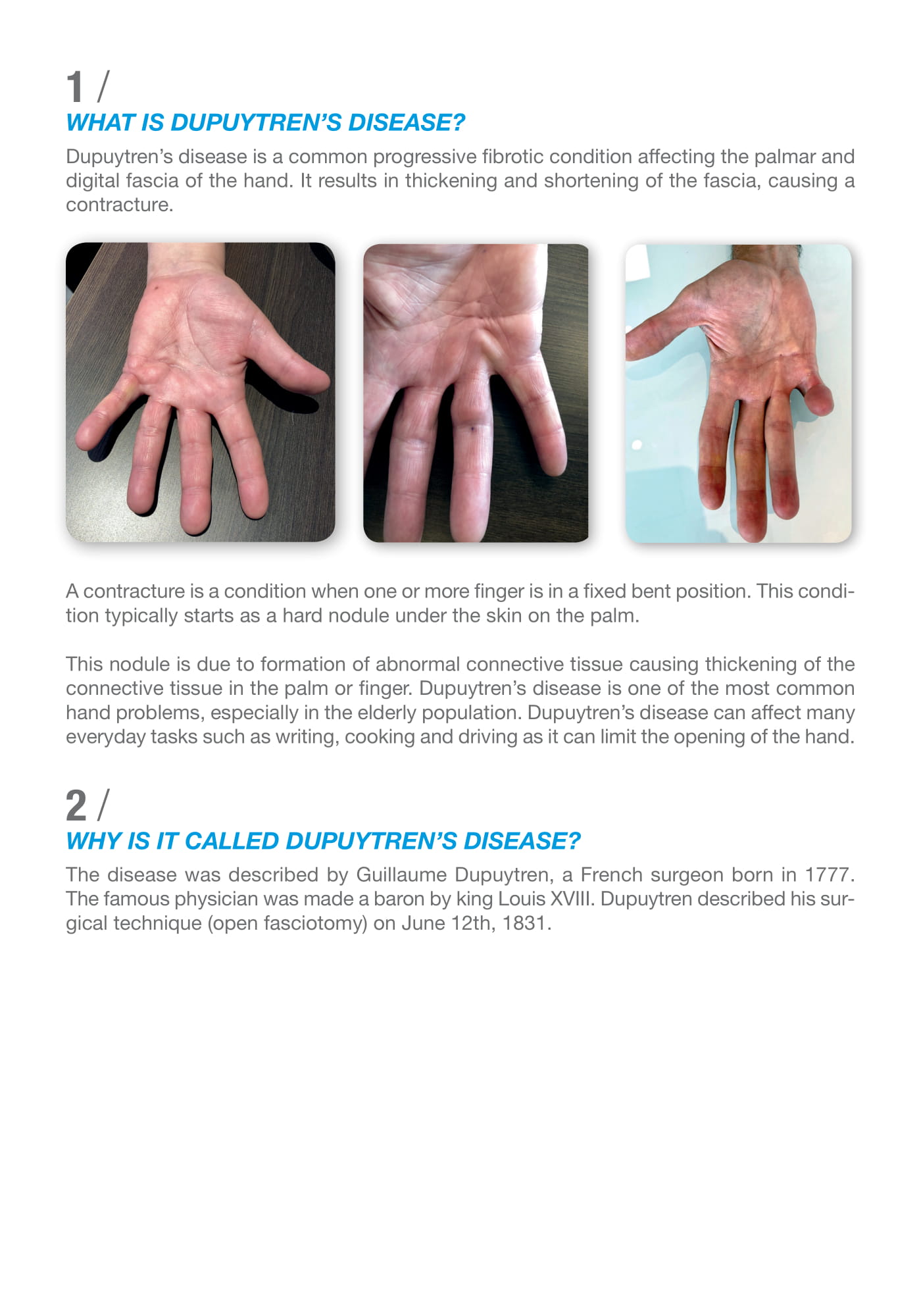
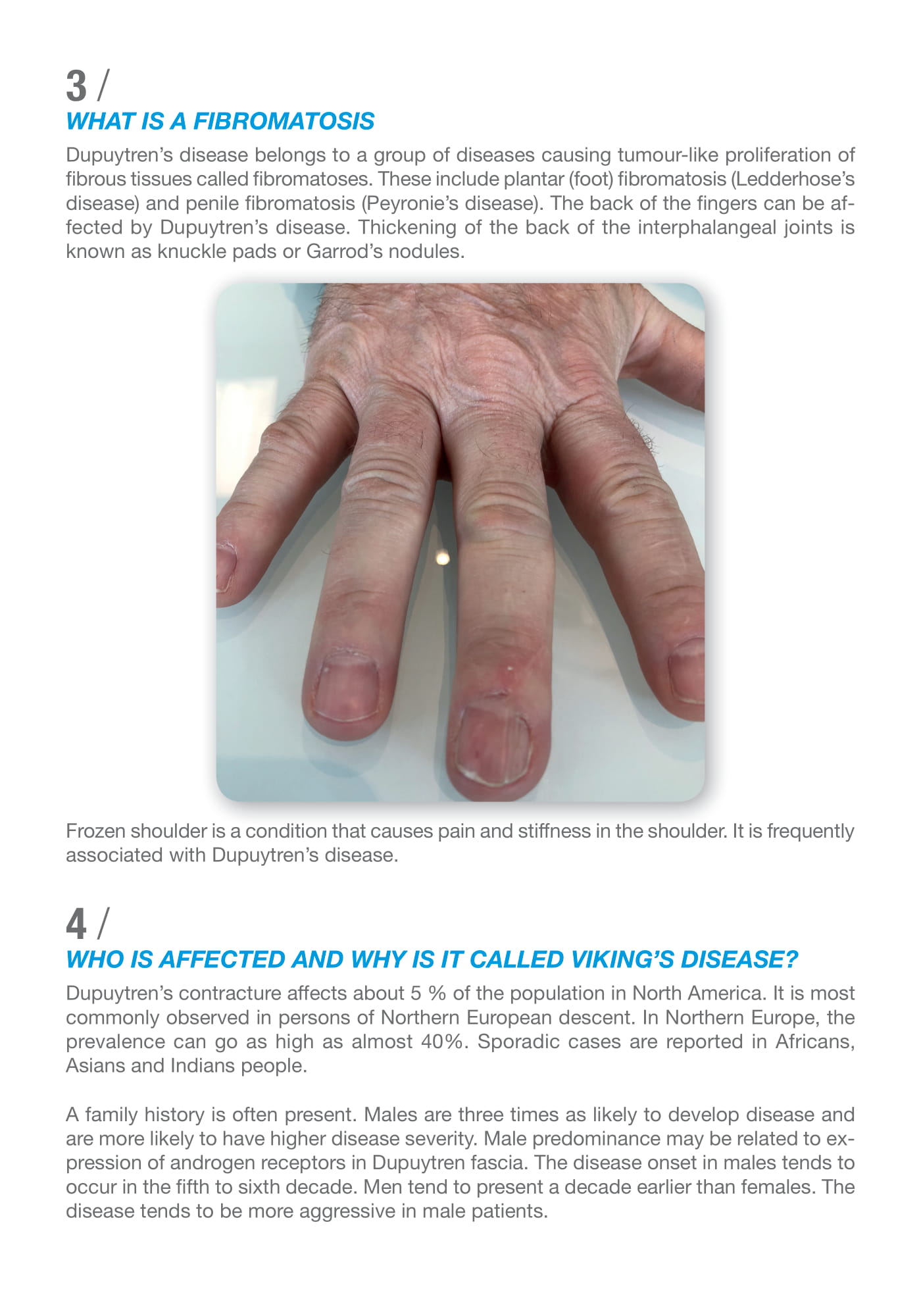
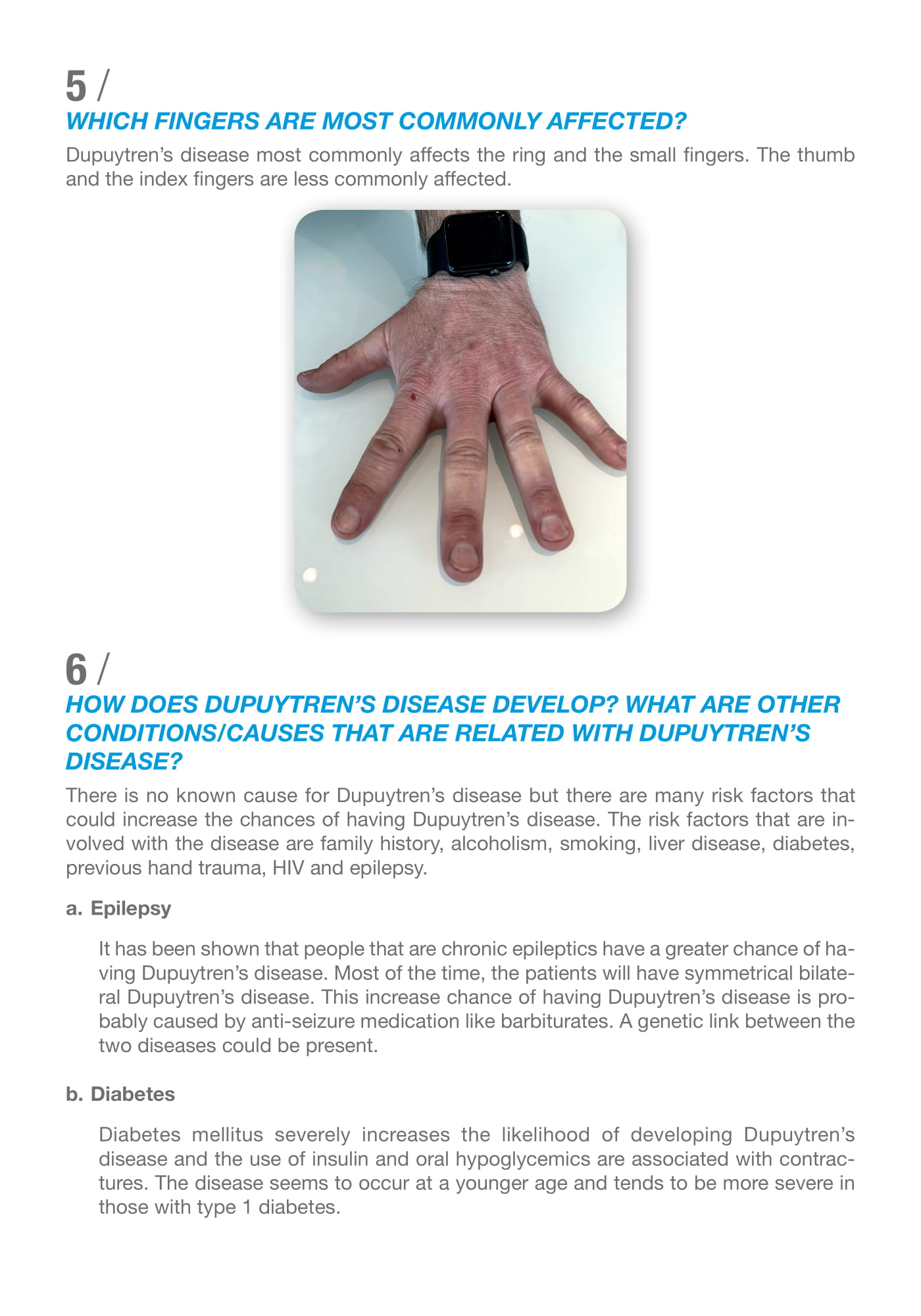
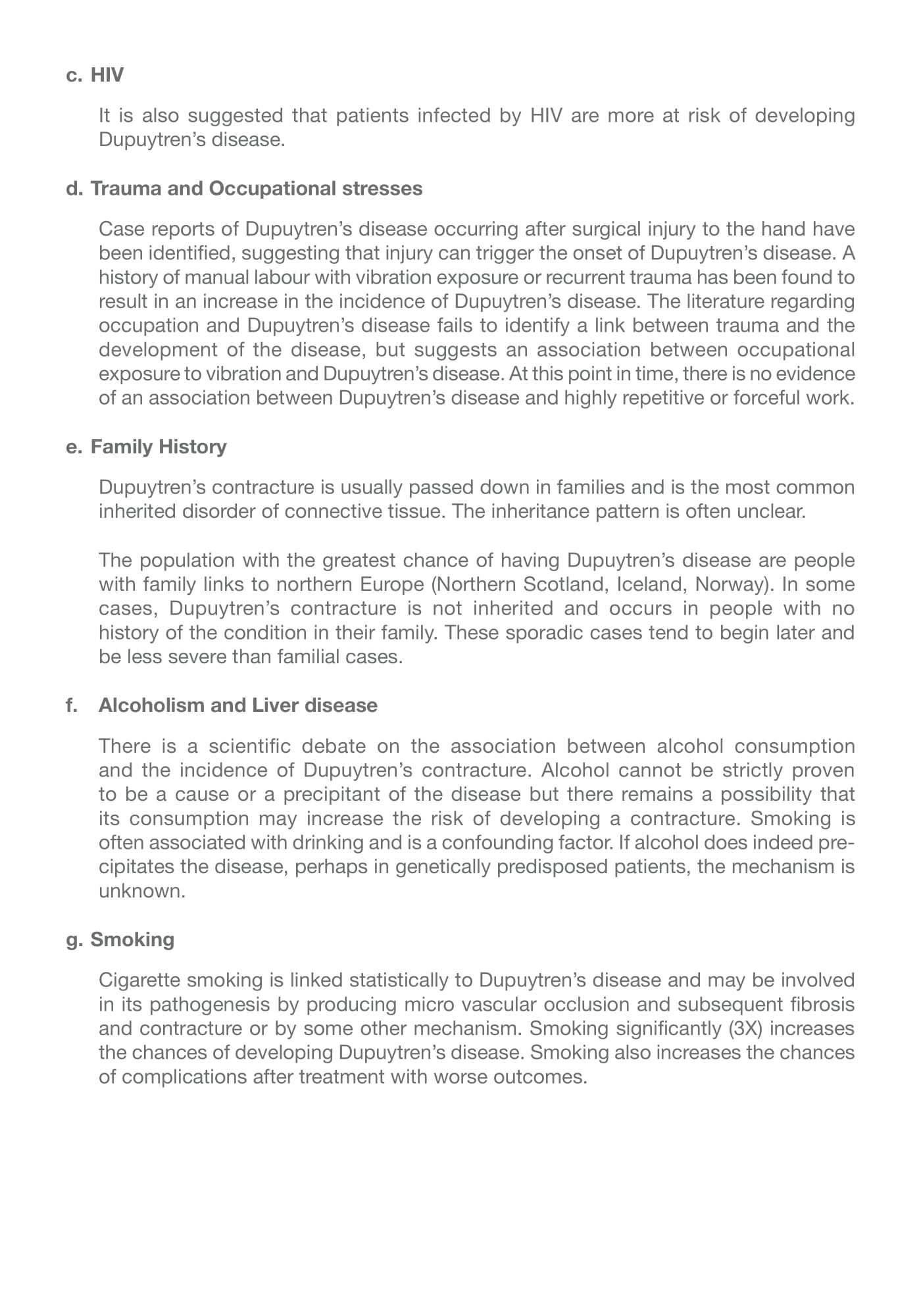
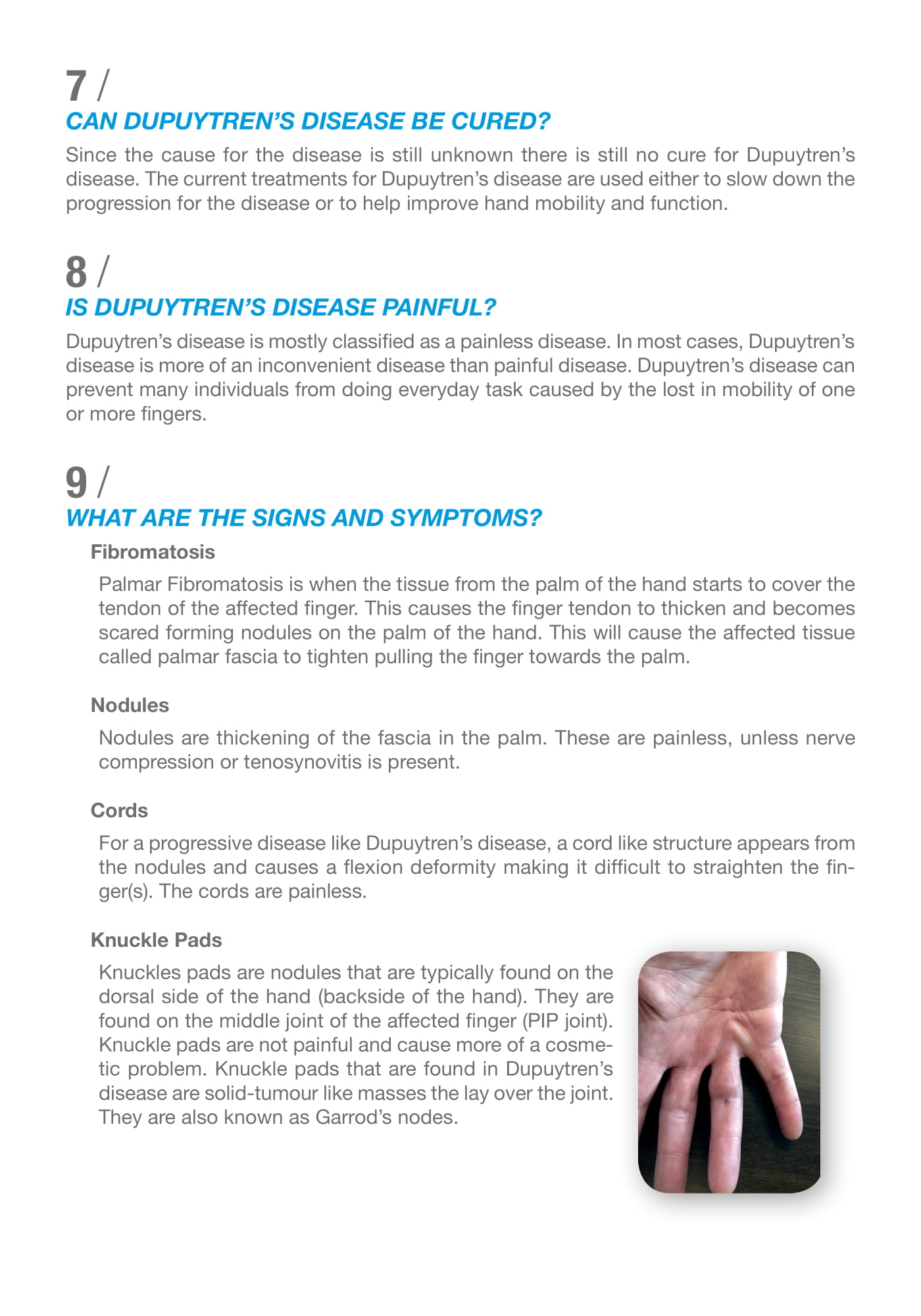
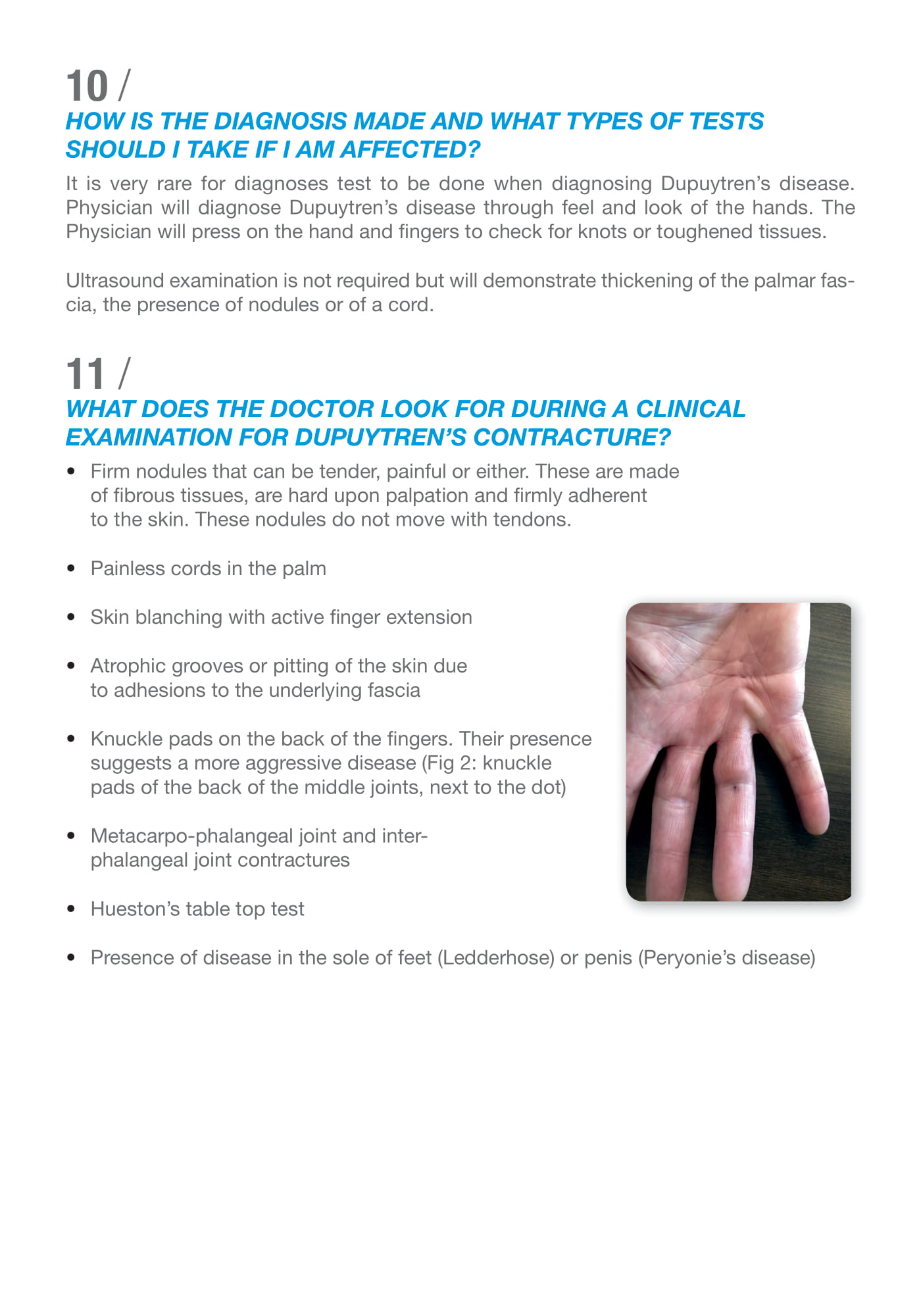
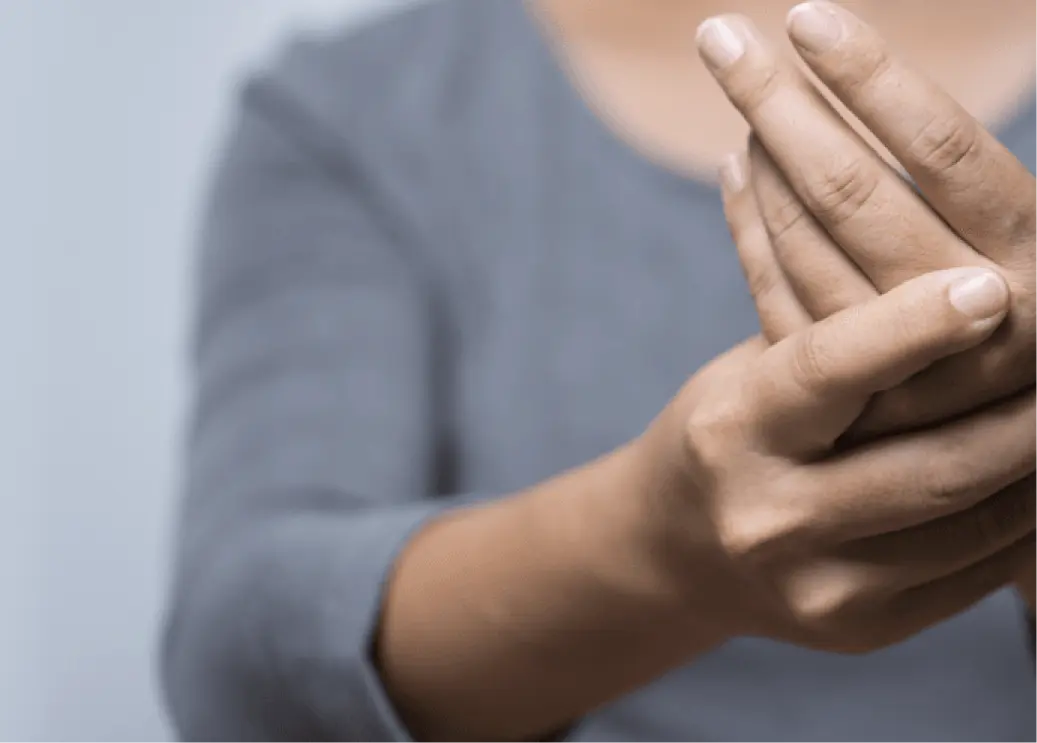
Dupuytren’s contracture is a common condition that causes your fingers to permanently pull toward your palm due to a thickening and hardening of the connective tissue (fascia) in your hand. A characteristic sign of the condition includes cords or bumps that form on the palm. It rarely causes pain and most often affects the ring and pinkie fingers. Over time, it may become difficult for you to fully flatten your hand.
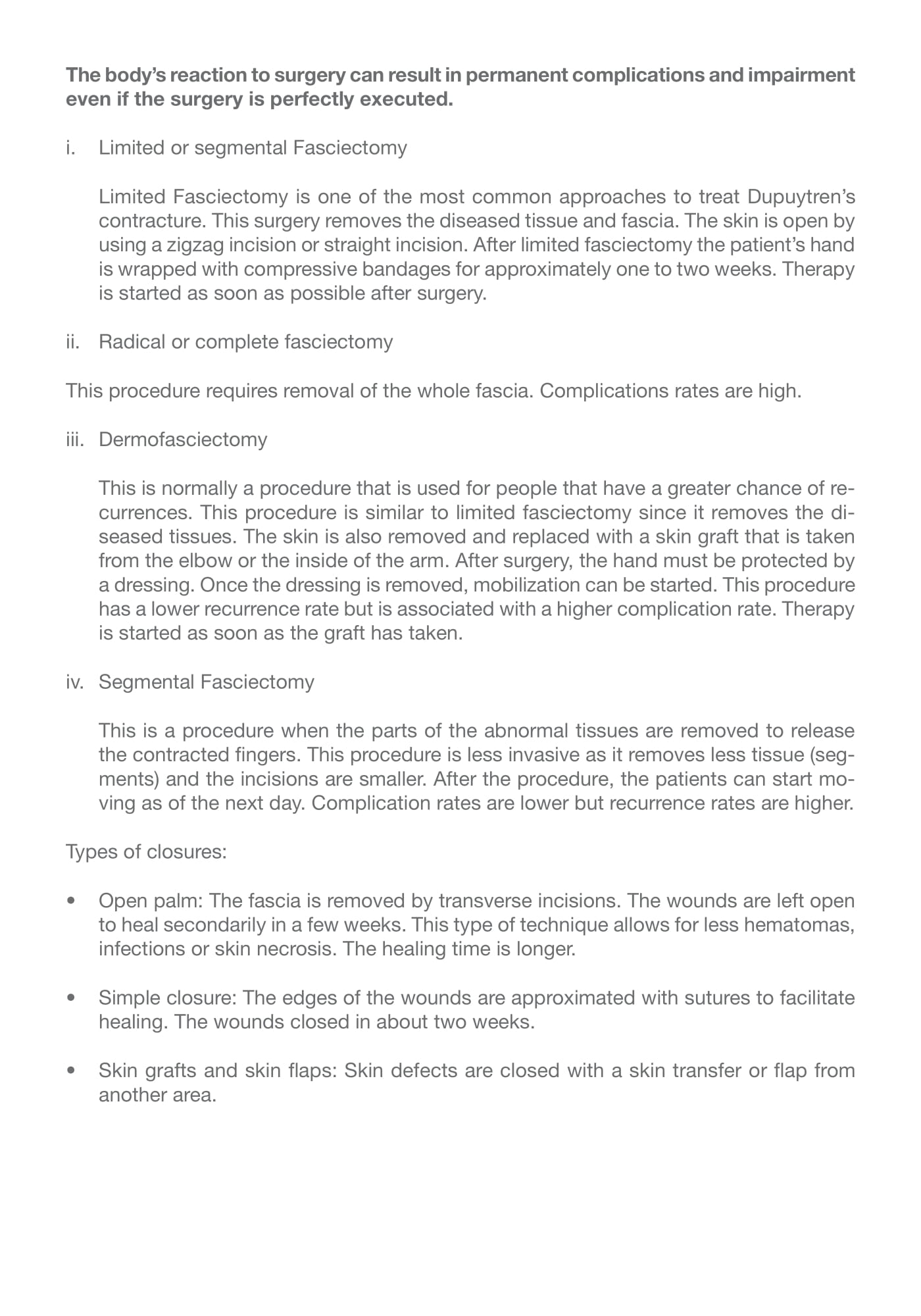
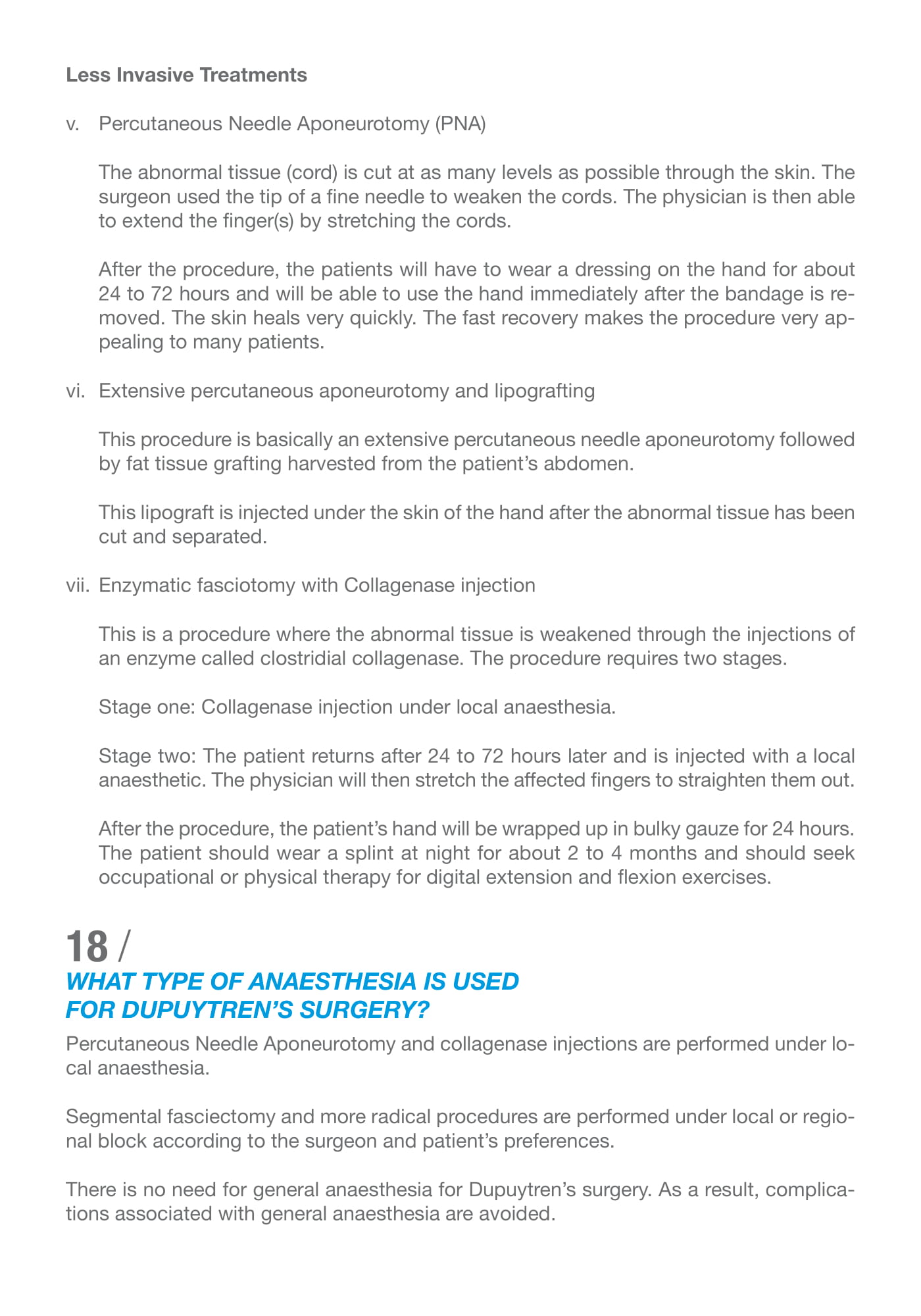
What causes Dupuytren’s contracture?
Also known as Viking disease, Dupuytren’s contracture is most often seen in people with northern European ancestry. The condition is usually genetic, as patients often present a family history of Dupuytren’s contracture. There are also cases where it seems to be brought on by an injury. Men are up to three times as likely to develop the condition and are often more severely affected.
How is Dupuytren’s contracture diagnosed?
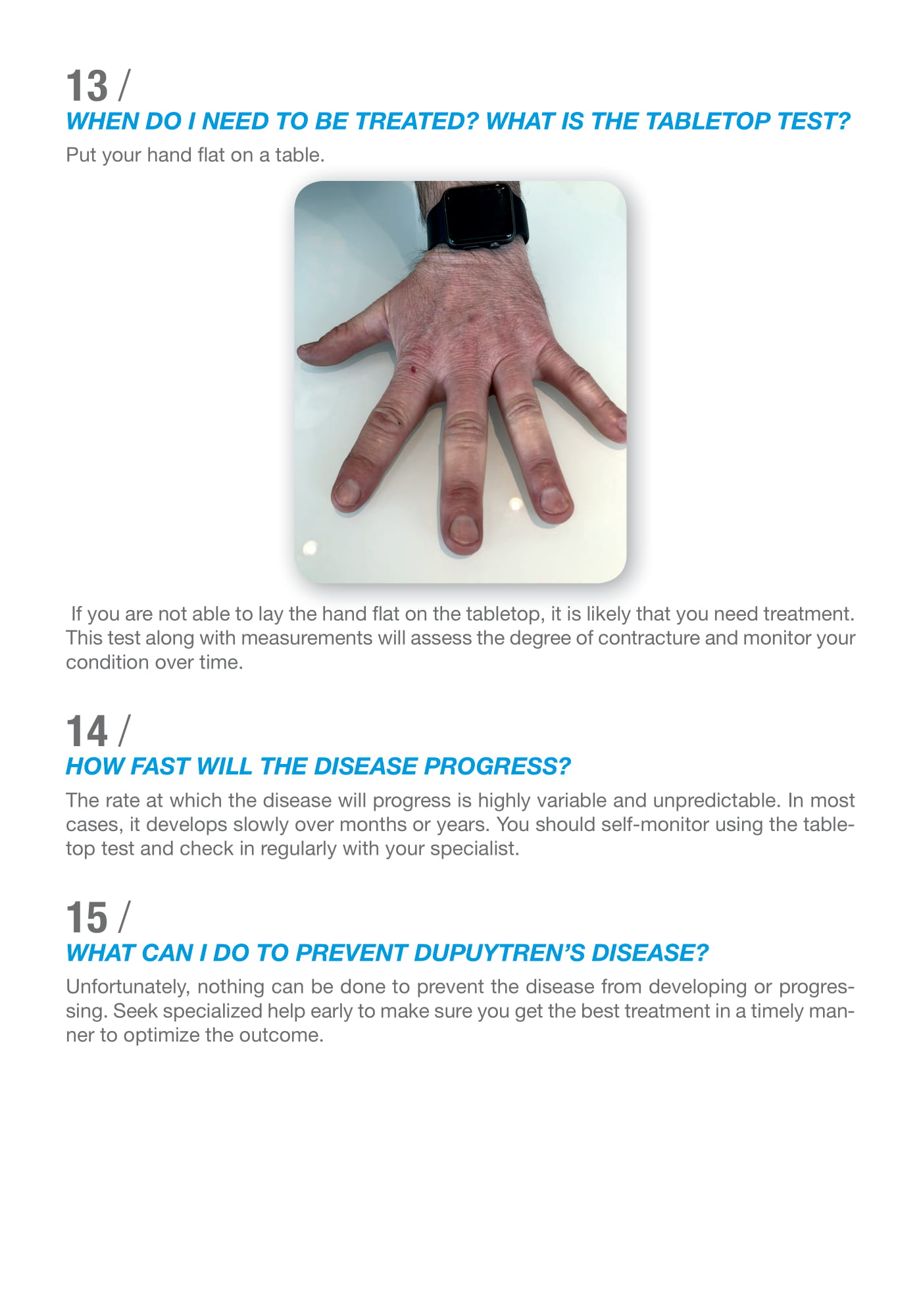
A doctor can diagnose Dupuytren’s contracture through a physical exam and family history. Thankfully, not everyone who has the condition will develop a severe case. To monitor how the condition is progressing, put your hand flat on a tabletop. If you’re unable to fully flatten it, you have probably developed Dupuytren’s contracture. Unfortunately, it isn’t possible to prevent the condition or keep it from progressing.
Is surgery always necessary?
Surgery becomes necessary when patients can no longer fully open their hands. Surgical treatment is often needed to improve hand function and can be performed using multiple small incisions to break up and remove the affected tissue. In some cases, a percutaneous needle aponevrotomy may be used without removing the affected tissue.
Will I get Dupuytren’s contracture again?
With Dupuytren’s contracture, a recurrence or worsening is likely, requiring a second surgery. Current treatments are used to slow the progression of the condition and improve mobility. Surgical success varies widely from patient to patient depending on their personal risk factors and the type of procedure. Needle aponevrotomies are fast, incision-free procedures that can ease symptoms. When this percutaneous technique is no longer an option, your doctor will need to perform a segmental fasciectomy.
Hear from more
satisfied patients
VISIT THESE INDEPENDENT PLATFORMS


You can start
smiling again, too!
IMPORTANT MESSAGE
Dr. Jean-Paul Brutus no longer performs surgeries. He now works as a specialized EXPERT-CONSULTANT in:
- COMPLEX CASES AND SECOND OPINIONS involving hand and wrist conditions.
- SELECTED MINIMALLY INVASIVE PROCEDURES (Dupuytren’s contracture, trigger finger, ultrasound-guided injections when indicated).
- MEDICOLEGAL ASSESSMENTS.
- RECEIVE A CLEAR DIAGNOSIS AND A CONCRETE PLAN to move out of confusion.
- Be REFERRED TO THE BEST SURGEON, within a trusted, carefully selected network.
- ACCESS MINIMALLY INVASIVE TREATMENTS, but only when they are truly appropriate.
PLEASE NOTE: We are not an injection center for external prescriptions. Such requests must be directed to a radiology clinic.